
AI facial recognition cameras are transforming security in the UK. The use of facial recognition technology offers real-time, highly accurate identification to safeguard homes, businesses, and public spaces.
With crime becoming more sophisticated, organisations face growing challenges in addressing new threats. Leveraging decades of expertise, i2 Security & Fire Protection delivers state-of-the-art AI-driven security solutions to meet these demands. These systems improve safety, increase operational efficiency, and boost trust in your organisation’s commitment to security.
In this blog post, we’ll discuss how AI facial recognition cameras are reshaping UK security and why they’re essential in modern strategies. We’ll also explain how i2 Security & Fire Protection can support you with expert installation and maintenance.
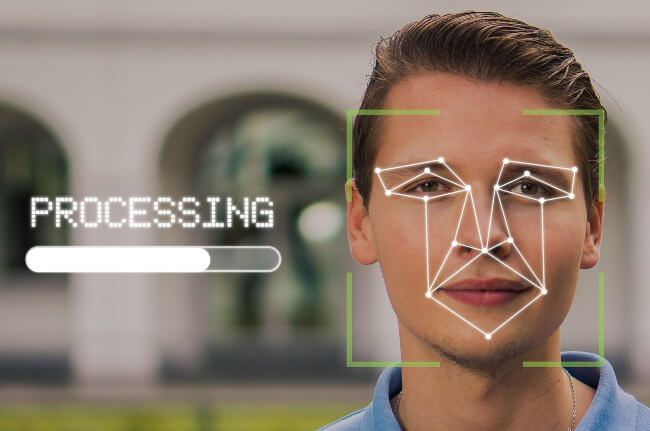
To fully understand what AI facial recognition cameras are you first need to get to grips with how AI facial recognition works, the common techniques used and the key features of AI cameras.
AI facial recognition cameras map and analyse unique biometric markers, such as the distance between the eyes, the shape of the jawline, and a person’s facial image. They compare this biometric data to stored profiles in a database for precise identification. Over time, machine learning (ML) enhances accuracy by processing large datasets.
Live facial recognition (LFR) adds real-time functionality by analysing video feeds and instantly comparing detected faces against a watchlist of persons of interest. LFR generates immediate alerts for rapid response, making it invaluable in dynamic environments like public events and high-security zones.
Live facial recognition technology is widely used in the UK for public safety, law enforcement, business and home security and Know Your Customer processes.
AI facial recognition cameras are widely used for public safety and law enforcement across England and Wales. Organisations like the Metropolitan Police Service (MPS) have deployed these systems at high-profile events like the UEFA Champions League final, where the use of live facial recognition (LFR) monitors crowds and identifies persons of interest in real time.
AI systems also help law enforcement locate missing persons, deter crime, aid arrests, and enhance public trust through transparent deployment practices like mobile LFR vans.
Transportation hubs like airports and train stations also use facial recognition to monitor passengers and detect individuals on watchlists. These systems streamline security operations and minimise risks during large-scale events or peak travel times.
AI facial recognition enhances security in retail and commercial settings. It prevents theft by identifying known individuals, enabling staff to act immediately. Facial recognition also automates attendance tracking, eliminating fraudulent practices like buddy-punching and improving workforce efficiency.
Facial recognition also improves customer experiences by recognising VIP clients, enabling seamless contactless payments, and delivering personalised advertisements. Platforms like Facewatch demonstrate how facial recognition technology helps retailers reduce losses, improve operational efficiency, and build stronger customer loyalty.
In residential settings, facial recognition enhances smart home ecosystems. These systems allow homeowners to monitor and control access remotely, offering greater convenience and peace of mind.
Facial recognition transforms financial services by digitising Know Your Customer (KYC) processes. These systems enable secure and remote identity verification, allowing customers to access banking services without visiting physical branches.
By improving onboarding efficiency and fraud prevention, facial recognition ensures compliance with regulatory standards while enhancing user convenience.
The key ethical and privacy concerns you need to consider when using AI facial recognition are data security and bias mitigation.
In the UK, facial recognition technology is governed by stringent regulations to ensure ethical use, protect individual rights, and preserve personal freedom. AI facial recognition camera systems must comply with UK Data Protection laws.
Additional legal frameworks, such as the Surveillance Camera Code of Practice, outline clear standards for responsible implementation.
AI facial recognition systems address demographic bias by training algorithms on diverse datasets to ensure fairness across all populations.
Developers rigorously test these systems to expose and correct biases during development, responding to concerns raised by advocacy groups like Big Brother Watch.
These efforts build trust among members of the public and enhance confidence in the technology’s ethical application.
When you use AI facial recognition cameras to enhance your business surveillance you increase security and efficiency, benefit from cost savings and build trust with your customers.
AI facial recognition cameras automate critical processes like access control and real-time monitoring, reducing operational bottlenecks and allowing security teams to focus on higher-priority tasks.
AI-powered CCTV significantly lowers financial losses by reducing theft, vandalism, and fraud. Their automation also minimises reliance on manual security staffing, offering long-term operational savings for organisations of all sizes.
Deploying AI facial recognition technology demonstrates a strong commitment to safety and innovation. Customers, clients, and stakeholders gain confidence in businesses prioritising advanced security measures.
This visible investment in cutting-edge solutions enhances reputation and promotes customer loyalty.
At i2 Security & Fire Protection, we specialise in designing and installing bespoke AI facial recognition systems tailored to your needs.
Whether you run a small business or a large enterprise, our expert team ensures seamless integration with your existing infrastructure to minimise disruption and maximise efficiency. We handle everything, from system design and professional installation to ongoing maintenance, so your system operates at peak performance.
Partnering with i2 means expert guidance, tailored advice, and a dedicated team committed to protecting your people, property, and assets. Our customer-first approach ensures every solution aligns with your specific security goals while upholding the highest standards of professionalism.
Yes, sunglasses can partially stop facial recognition systems, as they obscure key facial features like the eyes. However, advanced AI facial recognition cameras can still identify individuals using other visible features.
Older facial recognition systems could be fooled by a picture. However, modern AI facial recognition cameras use 3D imaging and liveness detection to prevent photo spoofing.
Facial recognition is legal in the UK when used in compliance with all applicable privacy laws.
AI facial recognition cameras are critical to modern security strategies. They deliver accuracy, efficiency, and peace of mind and help organisations stay ahead of emerging threats.
These advanced systems tackle many challenges, from improving public safety to reducing theft in retail environments and enhancing smart home security.
With decades of expertise, i2 Security & Fire Protection will help you implement this transformative technology effectively and ethically.
Contact us today for a personalised consultation. Our experienced team will assess your unique needs and provide complete support, from system design and installation to ongoing maintenance.